Global Power Plants
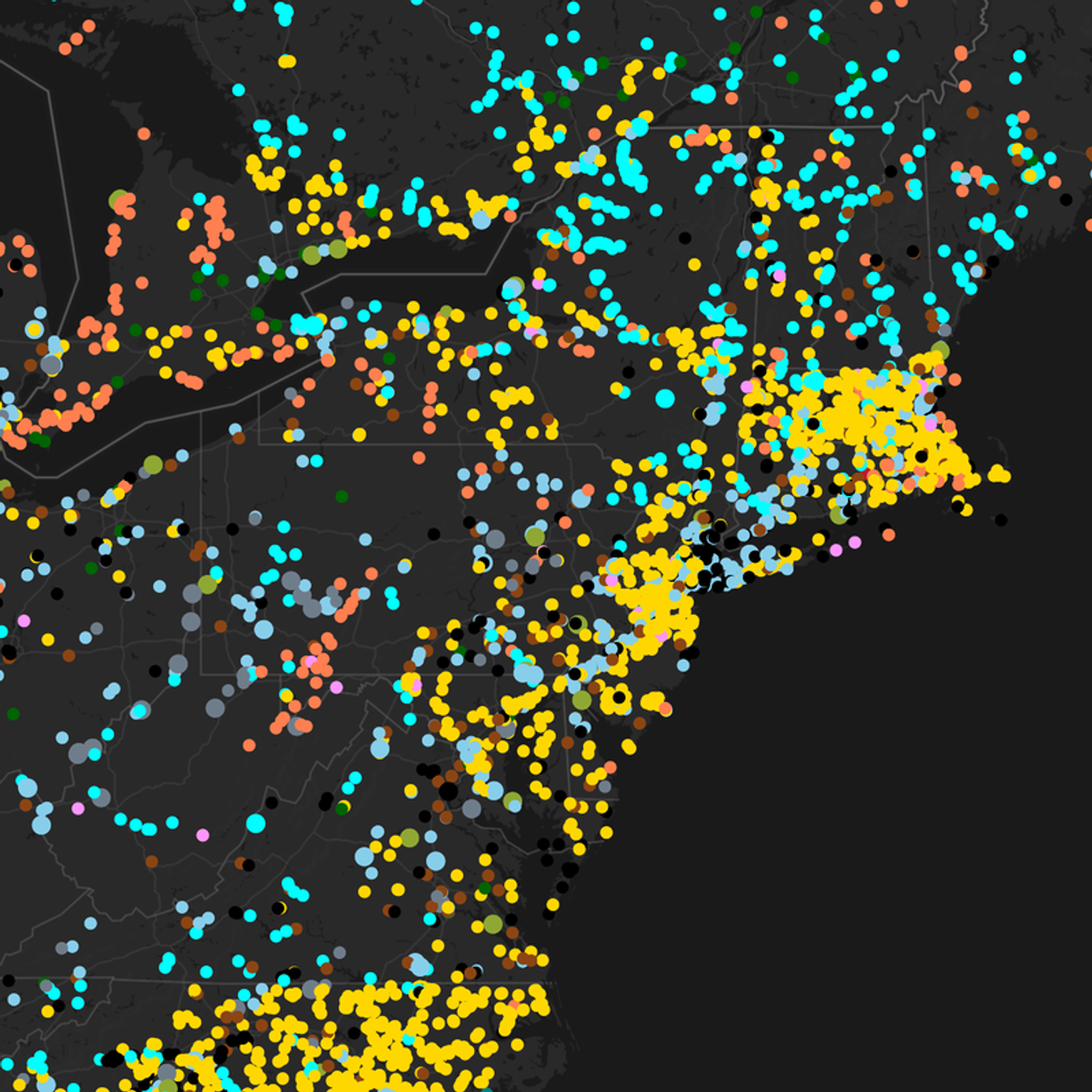
How I turned a raw dataset of 30,000+ power plants into a map anyone can explore.
Public data on global power generation is not hard to find. It is hard to use. The datasets exist, but they are built for analysts, spreadsheets of coordinates and capacity figures that tell you nothing unless you already know how to process them. If you just want to understand your own region's energy mix, where the power actually comes from, there is no obvious way in. That gap is what pulled me into this project.
So I built one. Global Power Plants is an interactive web map of more than 30,000 power stations worldwide. You can filter by fuel type, slide a capacity range, and toggle emissions layers on and off. The point was never to show everything at once. It was to let someone narrow 30,000 plants down to the slice they actually care about: the coal plants near their city, the hydro stations along a river, the biggest emitters on the continent.
The map runs on Mapbox GL JS, with plain JavaScript, HTML, and CSS around it. I designed the UI controls myself: the filters, the capacity slider, the emissions toggles. A dataset this dense fails fast if the interface fights you, so I leaned on standard cartographic UX patterns, hover states, button states, responsive feedback, anything that keeps a non-expert oriented. I wanted the map to work for someone who has never opened a GIS tool, not just for other GIS people.
The biggest lesson was about information density. There is a real limit to how much you can put on a map before it stops being readable, and I hit it early. Past that point, better visual design does not save you. Filtering does. Giving the user a way to cut the data down does more work than any amount of styling, and that idea has shaped how I approach every dense dataset since.
It ships as a self-serve tool on GitHub Pages. No login, no setup, no instructions needed. Open it, pick a fuel type, drag the slider, and see what powers the world. The map is live here, and the code is on GitHub if you want to see how it works.